
Boiler Install and Maintenance
Boiler Contractor in Calgary for Hydronic Heating Expertise
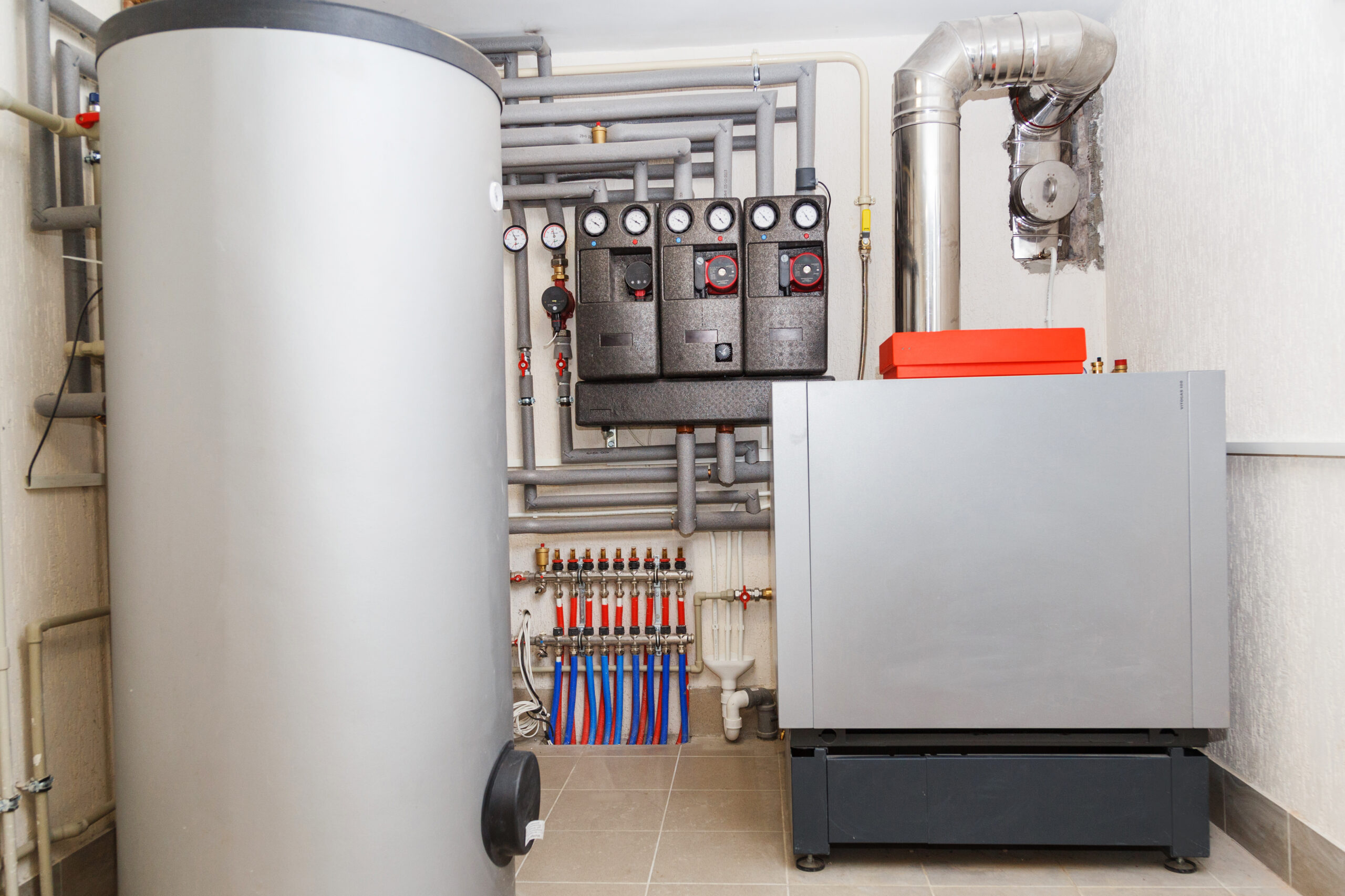
At Sure-Fit Mechanical, we specialize in boiler systems. Boiler systems can be used in many situations including in-floor heating systems and snow-melt systems. If you are building a house or a commercial property, allow us to make a case for a hydronic heating system.
When Calgarians talk about heating their homes or commercial buildings, the conversation has long defaulted to forced air. It’s familiar, it’s ubiquitous, and almost every home built in the last fifty years has one. But familiarity isn’t the same as superiority — and for anyone serious about comfort, energy performance, and long-term value, hydronic heating stands in a class of its own.
What Hydronic Heating Actually is
At its core, a hydronic system is elegantly simple: a high-efficiency boiler heats water, a circulating pump moves that water through a network of pipes, and heat radiates from the floor, wall panels, or baseboards directly into the living space. The water returns to the boiler cooled, gets reheated, and the loop continues. No fans, no ducts, no air being basted around the room.
Modern condensing boilers — the heart of any premium hydronic system — routinely achieve thermal efficiencies of 90% or greater. By contrast, forced air furnaces lose significant energy through duct leakage, which studies estimate accounts for 20–30% of heating energy in a typical North American home before the warm air ever reaches a living space. Water also carries heat roughly 3,500 times more effectively than air by volume, meaning a hydronic system moves the same amount of energy through dramatically smaller infrastructure with far less energy expenditure.

Comfort that's Fundamentally Different
Forced air heating warms the air inside a room. Hydronic radiant heating warms the objects and surfaces in a room — including the people in it. This distinction matters because radiant warmth mimics the sun: you feel warm even if the ambient air temperature is slightly lower, which means thermostats can often be set a degree or two lower while still feeling more comfortable. The result is a quieter, more even thermal environment with no drafts, no temperature stratification between floor and ceiling, and none of the dryness that accompanies constant air circulation.
Ducted forced air systems are, by design, air-moving machines. They circulate whatever is in the air — dust, allergens, pet dander, mold spores — throughout every room in the building. Hydronic systems have no ductwork. There is nothing to circulate airborne particulates, nothing to clean seasonally, and no moving air to dry out occupants or disturb settled particles. For allergy sufferers, asthmatics, or anyone in a healthcare or food-service environment, this is not a minor benefit.
Calgary's Climate Makes the Case Stronger
Our winters are genuinely punishing — extended periods below -20°C, with cold snaps that push past -40°C. Hydronic systems are engineered for exactly this environment. Glycol antifreeze mixes protect against freeze up in exposed runs. Boilers don't lose efficiency in extreme cold the way heat pumps do. And the same infrastructure that heats your building interior can be extended to power in-slab snow melt systems for driveways, walkways, and loading docks — a major operational advantage for commercial properties where ice management is a liability and a labour cost.
System Longevity and Operating Costs
A well-maintained hydronic boiler will operate for 20 to 30 years. The system has few moving parts — primarily the circulator pumps — and because it is a closed loop, the water inside it is treated and recirculated rather than contaminated by the environment. Forced air systems involve blowers, filters, heat exchangers, and miles of duct seams, all subject to wear, leakage, and maintenance demands. The lifetime cost comparison, when properly modelled, consistently favours hydronic.
The Bottom Line
Hydronic heating is not a premium luxury reserved for high-end custom homes. It is a technically superior approach to thermal comfort that pays dividends in energy savings, occupant health, operational reliability, and system lifespan. For any building owner, developer, or homeowner making a long-term investment in mechanical infrastructure, it deserves serious consideration — and a mechanical contractor who truly understands it.